
Somatic · PTSD & Trauma-Informed Psychotherapy · Brisbane
“Trauma is an invisible force that shapes our lives. It shapes the way we live, the way we love and the way we make sense of the world. It is the root of our deepest wounds.”
Somatic trauma psychotherapy in Brisbane – in English or Spanish
For when you understand your story, but your body still has not caught up. Gentle body-based work in West End, Milton or online.
- West End & Milton, Brisbane
- online across Australia
- sessions in English and Spanish
There is nothing fundamentally wrong with you.
Maybe you've spent years wondering why you think, feel, and react the way you do, and why you have certain beliefs, behaviours or patterns, such as:
- Believing that something is wrong with you, unworthy, etc.
- Overthinking
- “Feeling stuck”
- Struggling to trust yourself
- Putting other people's needs before your own
- Feeling anxious, overwhelmed, numb or disconnected
- Overreacting or shutting down, freezing, or withdrawing
- Being fearful of being judged, rejected or abandoned
- Believing you are unworthy
- Feeling shame
- Showing up in your relationships with the same patterns, even when you know you want something different
- Having involuntary movements
Your life has calmed down, but your body feels like it’s going haywire – tremors, crying randomly, extreme fatigue, dissociation, upset stomach.
Your body feels like it’s in a constant state of fight-or-flight.
Your body feels like it needs help to feel safe.
But what if your patterns aren't evidence that you're broken?
What if they developed in response to what you experienced, what you learned, and what you needed to do to feel safe, connected or accepted?
This doesn't mean you are a victim of your past.
It means there is something worth understanding.
When you begin to understand the reasons behind your responses, you can start to make new choices.
You don't have to become someone else.
You may simply need the opportunity to reconnect with parts of yourself you've lost touch with, such as your emotions, intuition, inner wisdom, and authentic self.
“Trauma is not what happens to you, but what happens inside you, when you are left alone with overwhelming feelings and emotions.”
If you feel ready to begin this journey, here’s what you can expect
Change takes time, curiosity, and a willingness to gently explore your inner world.
Through this process, you can learn to recognise your emotional triggers, understand your protective patterns, and respond to what is happening in the present rather than automatically reacting to what your past has taught you.
You can expect to work towards:
- Feeling more grounded and emotionally regulated: learning to stay present with your feelings and navigate difficult situations without becoming overwhelmed or shutting down.
- Reconnecting with yourself: becoming more aware of your body, emotions, intuition, instincts, and heart, so you can recognise what you feel, what you need, and what feels right for you.
- Developing self-compassion: relating to yourself with greater kindness, easing feelings of shame, and understanding the protective responses that developed through your life experiences.
- Building confidence in your choices: honouring your needs, recognising your values, and making decisions that reflect who you are and what matters to you.
- Setting healthy boundaries without guilt: expressing your needs more clearly while respecting the needs, boundaries, and individuality of others.
- Understanding and changing old patterns: becoming more aware of habits such as people-pleasing, defensiveness, emotional withdrawal, and automatic reactions that may no longer serve you.
- Creating healthier relationships: navigating conflict with greater awareness, communicating more openly, and building connections that allow for authenticity, mutual respect, and emotional closeness.
- Moving forward with greater clarity and freedom: feeling less controlled by past experiences and more able to choose how you respond to yourself, others, and life.
- Nervous System Discharge: When the body processes or releases persistent survival responses (like fight, flight, or freeze), energy flows through the vagus nerve and tissues, producing sensations such as humming, warmth, trembling, tingling, or deep resonant shifts.
- Teach yourself and your body that you are safe.
- Process fear.
- Be in contact with healthy anger.
Ultimately, this journey is about feeling more at home in yourself. It’s about reconnecting with who you are beneath the patterns you developed to protect yourself, feeling more comfortable with your emotions and needs, and meeting life with greater presence and self-acceptance.
You can take this journey at your own pace. Together, we can create space for you to understand yourself more deeply, explore new ways of responding, and gradually build a life in which you feel more grounded, connected, fulfilled, and content.
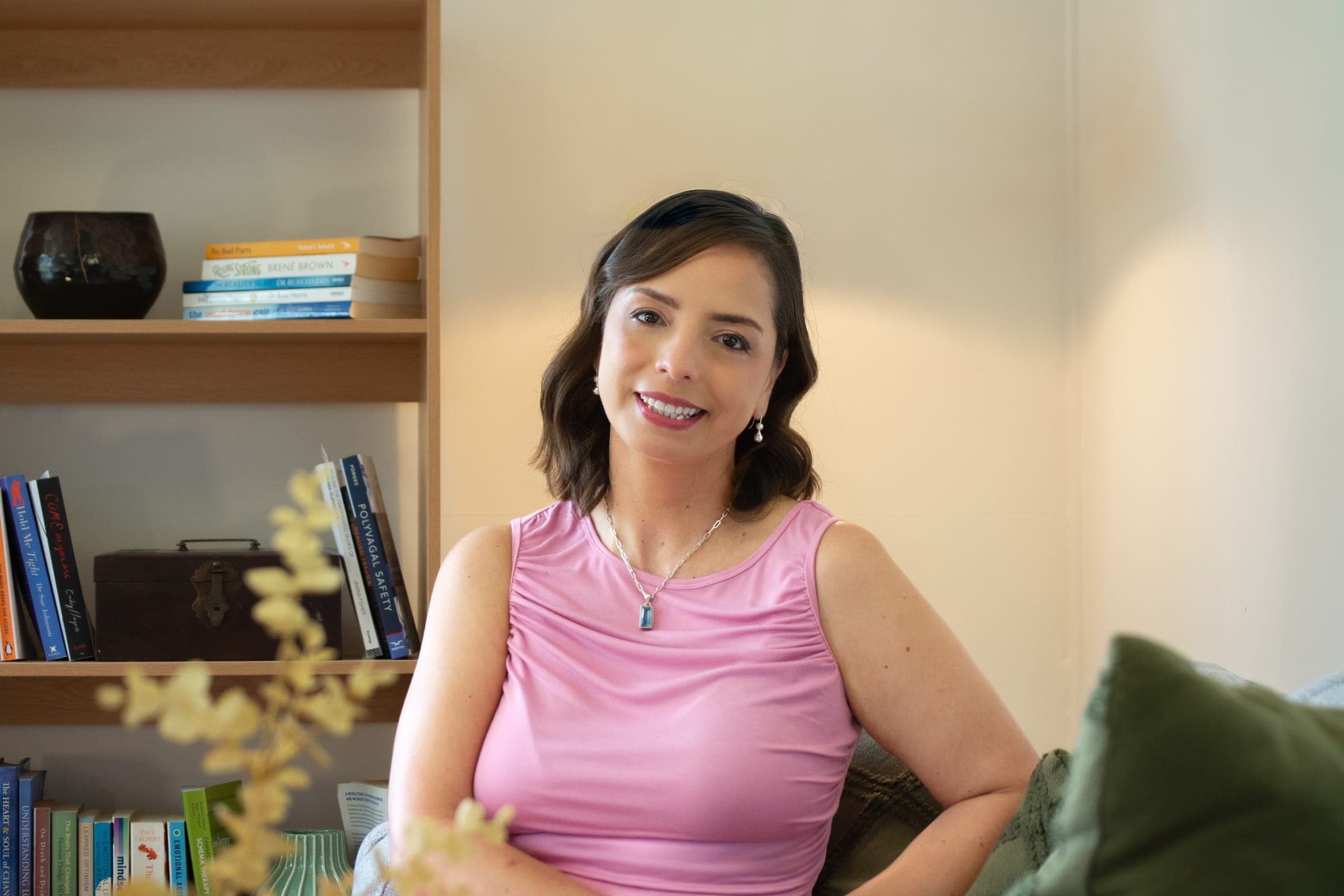
I'm Alpha Ponce, a Clinical Somatic Trauma-Informed PACFA Clinical Psychotherapist. I work with adults and teenagers who want to understand their emotions, body responses, relationship patterns and protective strategies so they can create meaningful change and reconnect with a stronger sense of self.
My work draws on Compassionate Inquiry, Somatic Experiencing, Sensorimotor Psychotherapy, Emotionally Focused Therapy and Gestalt Psychotherapy.
Sessions are available in English and Spanish.
“Many people understand their past and still feel stuck in it. I help you release what your body holds, so you can feel safe, connected, and like yourself again.”
We all have trauma. It is part of our story. Healing begins by witnessing and honouring what happened, offering gratitude for the ways your system learned to survive. Your past deserves to be heard and held with care. Only then can these patterns soften and transform, allowing you to release the constant need for protection and finally inhabit your authentic self.
What we work with
The body and the autonomic nervous system can resolve trauma, chronic stress, and shock stored as physical tension.
- Trauma and PTSD: Events like car accidents, natural disasters, physical or sexual abuse, and war trauma.
- Developmental and Attachment Trauma: Early-life relational stress or emotional neglect.
- Anxiety and Panic: Persistent fight-or-flight states, racing heart, and hypervigilance.
- Depression and Freeze Responses: Feelings of numbness, helplessness, shutdown, or dissociation.
- Chronic Pain and Stress Disorders: Tension, fibromyalgia, and somatic complaints linked to nervous system overload.
- Grief and Loss: Overwhelming emotional weight that feels physically trapped.
Trauma and the emotional wound
The word trauma comes from the Greek word for “wound”. An emotional wound may affect your sense of safety, your self-worth or your connection with others, and an attachment wound can shape how you seek closeness, trust people, or respond when connection feels uncertain. In therapy, we explore what the experience means for you, without assuming that every difficulty has the same cause.
Body and Beliefs
Shock and trauma can continue to affect the body, nervous system, emotions and behaviour. It can help you understand protective beliefs and patterns such as fight, flight, freeze, shutdown and hypervigilance, so you can develop greater awareness, regulation and choice rather than being automatically driven by patterns shaped by the past.
Integration and Embodiment
You may know intellectually that you are worthy or capable yet struggle to feel it. Through integration and embodiment, we explore how that understanding can become more accessible in your physical experience and everyday choices. You can start to feel what safety and self-worth feel like in your own skin and live from your authentic Self and lived experience.
Understanding your attachment style
Early relationships can shape how you seek closeness, respond to conflict and protect yourself. An attachment wound may leave you fearing rejection, putting others first, or withdrawing when connection feels difficult. Exploring your attachment style can help you understand these patterns without treating them as a fixed identity.
How I can help
Ways in
Each of these is a way into the same body-based work. If you're not sure which one is yours, write to me, and I'll help you choose.
Trained, registered and accountable




Alpha is a PACFA Registered Clinical Counsellor and Somatic Psychotherapist. Sessions may be claimable through private health insurance or WorkCover.
Where we meet
Two locations in Brisbane, or wherever you are
In person in West End and Milton, or online across Australia and internationally.
West End
431 Montague Road, West End QLD 4101- Tuesday 9am–6pm
- Thursday 9am–6pm
Milton
Unit 30, 1 Park Rd, Milton QLD 4064- Wednesday 9am–6pm
Before you go
So if you've read this far and something in you wants to change, I want you to know something:
There is hope.
It is possible to untangle the emotional weight you hold.
It is possible to return to your authentic wholeness.
And it is possible to reclaim the clarity to shape a life that truly belongs to you.
Write to me
Would you rather just write?
If you'd rather send a message before booking anything, this is the place. It comes straight to my inbox, and I'm the one who answers it.